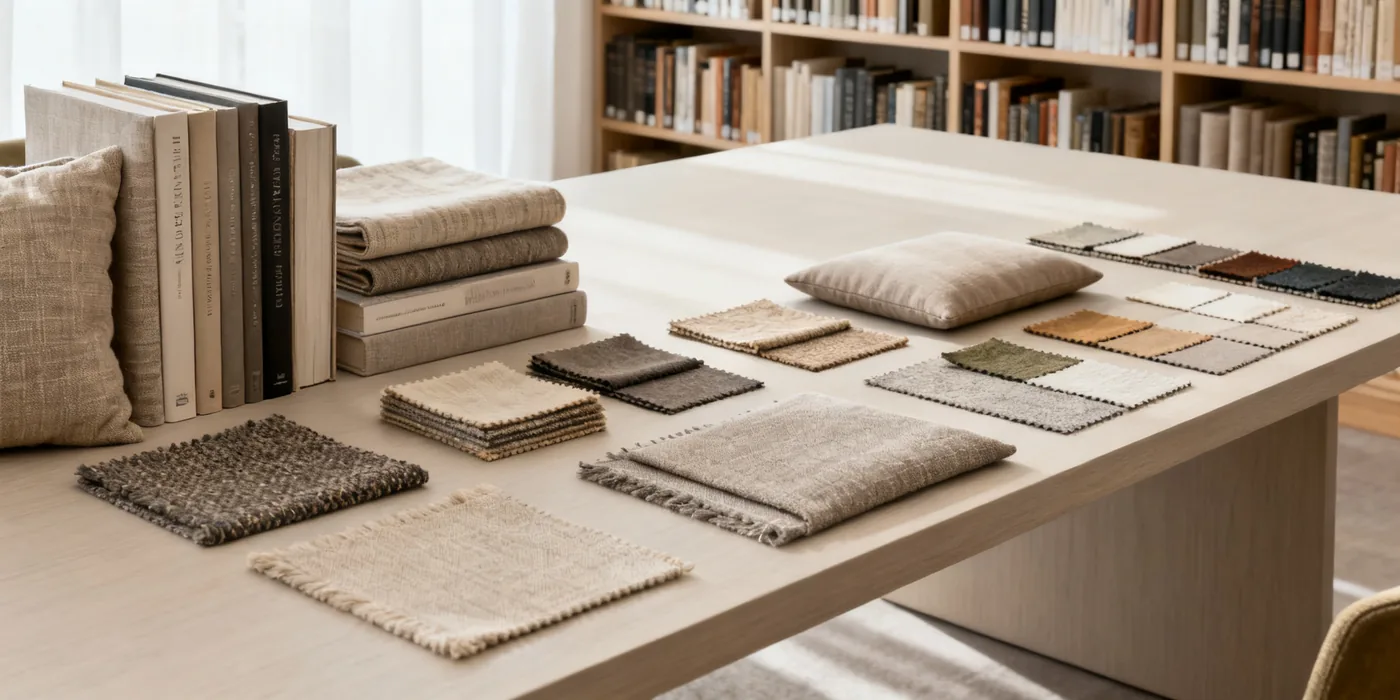
Discuss the physical material
Composition and GSM open the description of a Sunbrella fabric, and they should stay in their own sentences. Composition tells you the fibre story you expect to see declared. GSM, written as grams per square metre with any agreed tolerance, tells you a mass target. Neither sentence describes the weave, the yarn size, the hand or the finish. A textured indoor upholstery and a flatter shade cloth can be talked about with the same brand name and still need different construction notes.
Usable width is the next physical fact that changes a cutting plan. Ask which portion is cuttable and which portion is selvedge. If a roll length matters to the cushion or awning layout, treat the length as an order question rather than a number copied from a general page. Finish comes after construction: name the surface treatment, coating or other process only when you know it applies, and keep its durability context beside that name.
Shade language needs the same care. A screen color is a starting hint. A lab dip or a shade band is a discussion tool. The physical cutting, viewed under an agreed light, is the reference you can actually approve. Write the date of that cutting when you have it, because the next lot conversation depends on knowing which standard was used. Yarn size, when it is known, stays in denier or dtex. Do not convert it into a cotton count on this page.
Discuss the intended use
Care, exposure and assembly decide which evidence is worth requesting. An indoor seat may be judged by hand, pilling and how the cloth looks after ordinary wiping. An outdoor cushion adds rain, sunlight and the habit of leaving the cushion on the furniture or bringing it inside. An awning or marine cover adds tension, seams and storage. Those are different briefs even when each one points at outdoor performance fabric.
When a wearer, a householder or a specifier mentions abrasion, tear, water or colorfastness, ask for the method and the specimen state before comparing figures. A result for one finish does not travel to another construction. Water resistance and moisture vapour transmission stay in separate lines. This site does not publish a numeric performance table, a certificate number or a client list, because those records are not part of the planning profile.
The practical next description is short: cloth family, construction, known dimensions, finish, setting and the decision still open. Glen Raven is the corporate name associated with the Sunbrella material brand in the planning sources. That relationship is not expanded here into an industrial product range, a capacity claim or a statement that this website is an official storefront.